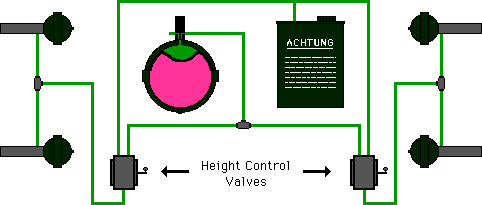
The suspension subsystem is fed directly from the main accumulator the way the
other subsystems are.
The feed immediately splits front and rear, each passing through a Height Control
Valve. When each valve is activated, high-pressure fluid inflates the pair of
load-bearing shocks. When the valve is in the neutral position, the pressure
level remains constant between the pair. When the valve is deactivated, the
fluid in the shock pair drains directly back to the reservoir. Sharing pressure
between left and right shocks provided many benefits. The tendency to equalize
pressure between the two accomplished a horizontal self-leveling, even at high
speeds. This achieved a natural anti-roll effect and gave the relatively large
and heavy sedan remarkably good cornering capabilities. While sharing pressure
left to right provided many benefits, it proved more advantageous to have pressure
separated fore and aft. This was accomplished through the independent height
control valves. If the load on the rear of the car increased, the rear valve
would be activated and a greater volume of high-pressure fluid would be allowed
into that pair.